
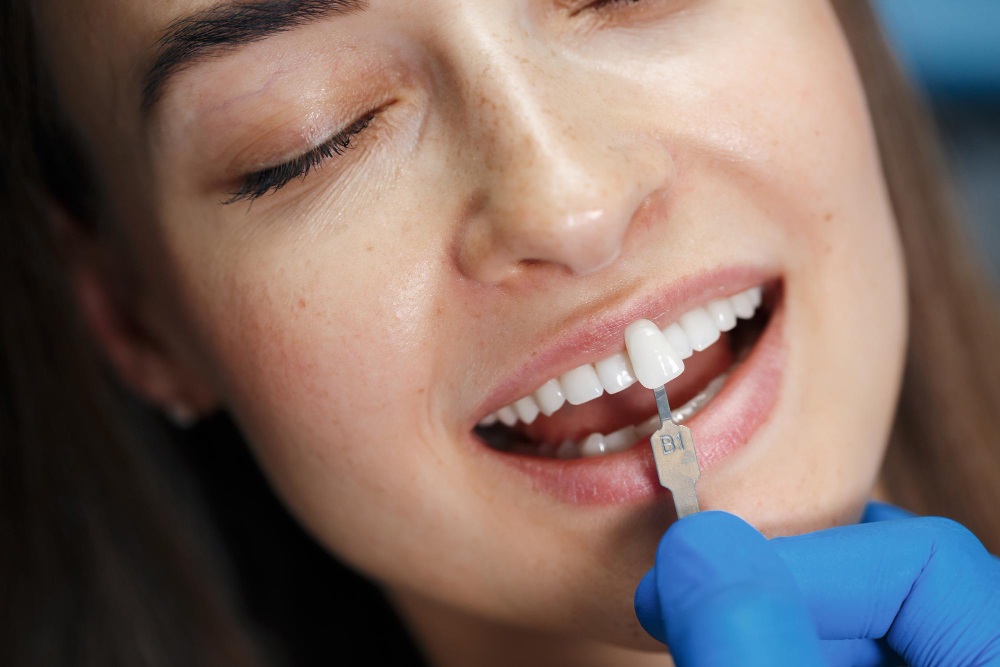
Introduction to Dental Veneers and Their Benefits
Dental veneers are thin covers placed on the front of your teeth. They help improve the look of your smile. Many people choose veneers to fix chipped, stained, or uneven teeth. Because veneers look natural, they are a popular choice. The 3 step procedure for dental veneers is simple and safe. Most patients find the process easy and comfortable. According to the American Dental Association (ADA), veneers can last many years with proper care.
The 3 Step Dental Veneer Procedure Explained
Understanding the 3 step dental veneer procedure helps you know what to expect. Each step is important for a great result. Let’s look at each stage in detail.
Step 1: Consultation and Planning
First, you meet with your dentist for a consultation. During this visit, you discuss your goals and concerns. The dentist checks your teeth and explains if veneers are right for you. Sometimes, X-rays or impressions are taken. This helps the dentist plan your treatment. After this, you will know what to expect with dental veneers.
Step 2: Tooth Preparation
Next, your dentist prepares your teeth for veneers. Usually, a small amount of enamel is removed from the front of each tooth. This makes space for the veneer. Often, local numbing is used, so you feel little to no pain. Then, the dentist takes a mold of your teeth. This mold is sent to a dental lab, where your custom veneers are made. While you wait, you may get temporary veneers to protect your teeth.
Step 3: Veneer Placement
Finally, your dentist places the permanent veneers. First, the dentist checks the fit and color. If needed, small changes are made. Then, the veneers are bonded to your teeth using a special glue. A light is used to harden the glue quickly. After this, your new smile is ready to show off. Most patients feel comfortable right away.
What to Expect During Each Step
Knowing what happens at each stage can ease your mind. At the consultation, you can ask questions and share your wishes. During tooth preparation, you may feel mild pressure, but not pain. After veneer placement, your teeth may feel a bit sensitive. However, this usually goes away in a few days. Most people return to normal activities right after the procedure.
Aftercare Tips and Lifestyle Guidance
Proper care helps your veneers last longer. Here are some simple tips:
With good habits, veneers can last 10 years or more.
Common Questions and Answers About Dental Veneers
Risks and Considerations
While veneers are safe, there are some risks. For example, enamel removal is not reversible. Sometimes, veneers can chip or come loose. Rarely, teeth may become sensitive to hot or cold. However, most problems are minor and can be fixed by your dentist. Always choose a skilled dentist for the best results. The ADA recommends regular dental visits to keep your veneers in top shape.
Prevention of Veneer Damage
To keep your veneers looking great, follow these steps:
By taking care, you can enjoy your new smile for many years.
Conclusion
Dental veneers offer a simple way to improve your smile. The 3 step procedure for dental veneers is safe and effective. If you want to know more about dental veneers in your area, consult a qualified dentist to learn if dental veneers are right for you.